
THE STORY
Impulse Space has announced a $28 million U.S. Space Force contract for a mission that puts an optical observer in one orbital region to watch objects in another. Under the September 22 announcement, a government-provided launch will deliver Impulse's Mira spacecraft to low Earth orbit. Its government-furnished optical payload, supplied by MIT Lincoln Laboratory, will observe objects in geostationary orbit, or GEO. Mira itself is not being sent to GEO for this mission. Launch is planned no earlier than 2029, making this a procurement milestone for a future demonstration.
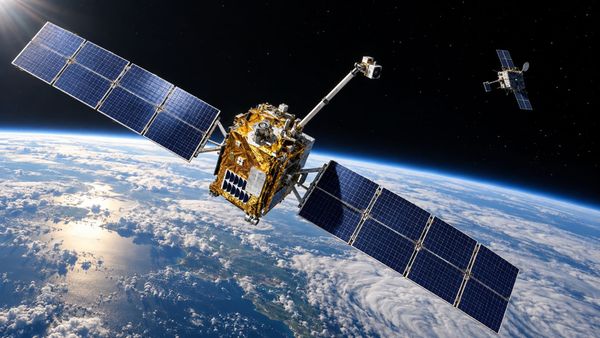
That separation between observer and target is the engineering hook. Space domain awareness means understanding the objects and activity in space; this mission proposes to gather optical observations of GEO objects from a spacecraft operating in low Earth orbit. The announcement identifies who provides the spacecraft, sensor and launch, but leaves the instrument's performance largely undisclosed. It supplies no sensor resolution, detection thresholds, coverage, tasking cadence or operational accuracy. Consequently, it supports a clear description of the architecture, but not a claim about how small an object Mira could detect or how much physical detail it could resolve.
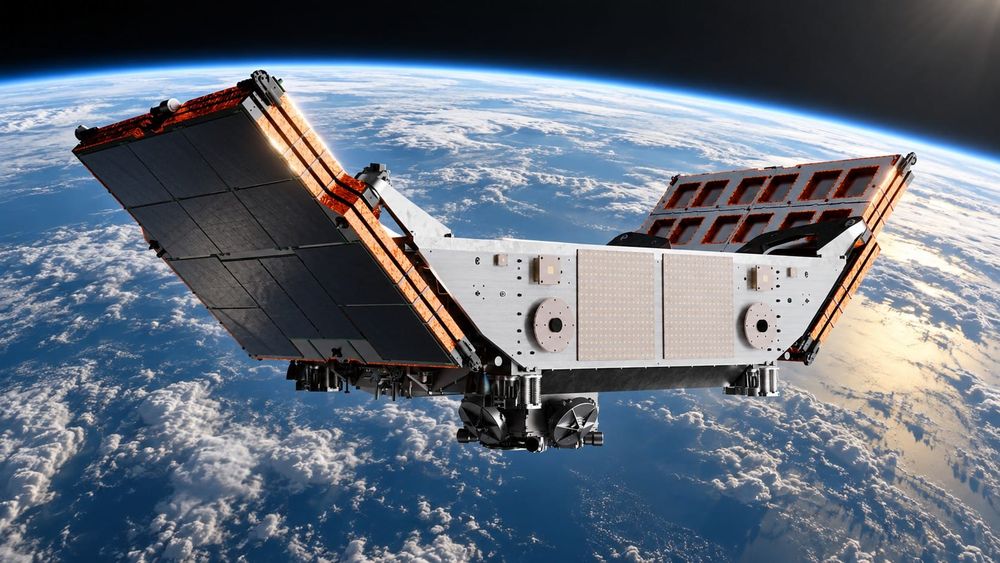
Mira brings a maneuvering platform to that architecture. On its published spacecraft page, Impulse specifies chemical propulsion using nitrous oxide and ethane, with up to 850 meters per second of delta-v while carrying a 100-kilogram payload. Delta-v describes a spacecraft's capacity to change velocity through propulsion. Impulse also advertises payload capacity reaching 300 kilograms, with lower delta-v at that loading. These are company platform specifications, not the disclosed mass or performance of the Lincoln Laboratory mission. The final configuration cannot be reconstructed from those headline numbers alone.
Impulse describes Mira as supporting hosted payloads, deployment and responsive maneuvers. Its listed mission history includes a November 2023 debut demonstrating an orbit raise and customer-payload deployment, followed by a January 2025 mission supporting long-term hosted payloads. Those flights provide relevant platform context without proving this future sensor mission. Part of the new funding comes from a $19.75 million FY2026 APFIT award, a procurement initiative supporting accelerated adoption and scaling of innovative technology. The capability at stake is a commercial spacecraft hosting a government optical instrument for GEO observation from low Earth orbit. Success would establish that particular combination in flight; the contract alone establishes the intention to build and demonstrate it.
THE DOUGH
The award gives Impulse a funded mission integrating its spacecraft with a government-furnished sensor and launch. If the demonstration succeeds, it could support demand for hosted-payload integration, mission operations and maneuverable spacecraft platforms. A plausible commercial advantage would be adapting a platform with prior missions to additional government sensing requirements, although the announcement does not establish repeat orders or margins. The separate August $28 million VICTUS SALO extension concerns different missions and should not be conflated with this award.
We are not financial analysts or investment advisors. Nothing in this newsletter constitutes investment advice. All economic analysis is speculative and for informational purposes only. Do your own research.
THE POSSIBILITIES
This mission could help test whether the observing spacecraft and the objects of interest can occupy different orbital regions while still producing useful awareness data. If demonstrated, that would give future planners another architecture to evaluate, although the supplied evidence cannot establish its advantages over alternatives.
THE HURDLES
The spacecraft, optical payload and operations plan still have to function together, with launch no earlier than 2029. Without disclosed sensor performance or mission-specific propulsion requirements, it is too early to judge coverage, endurance or the operational value of Mira's maneuverability.
WHAT TO WATCH
- Disclosure of the optical payload's measurement objectives and performance requirements.
- Mission-specific Mira configuration, including payload mass and maneuvering requirements.
- Payload integration milestones and confirmation of launch arrangements.
- Demonstration results showing useful GEO observations from low Earth orbit.
Void Economy is researched, written, and illustrated with AI, reviewed and edited by a real, live, flesh-n-blood human.