

THE STORY
HEO is preparing to extend its spacecraft-imaging network into geostationary orbit, or GEO. On September 21, the company announced a closed $25 million Series B intended to support that expansion, with the announcement date corroborated by Axios reporting. The compelling development is the planned change in what HEO can observe: it wants to make repeatable images of objects in GEO part of its service. HEO reports two booked launches to begin establishing that sensor network, with the first expected before the end of 2026 and repeatable GEO imaging targeted for 2027. Those remain company deployment targets; the financing does not establish that the new service works.
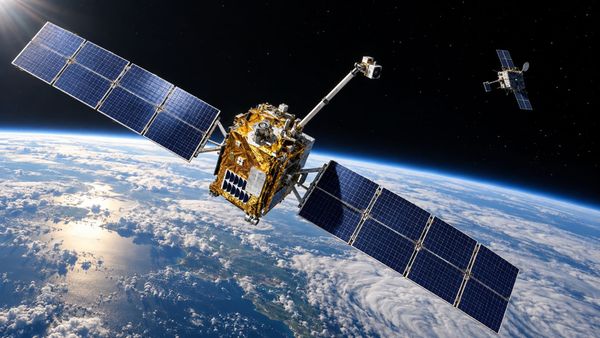
The existing architecture makes this more interesting than a proposal to build a camera constellation from scratch. According to Payload, HEO's network already combines more than 50 orbital sensors, drawing on partner cameras and HEO instruments carried as hosted payloads aboard other operators' spacecraft. Planet and BlackSky sensors contribute to that network. HEO also purchased an operational satellite from Satellogic in January. Together, those arrangements show a business assembling access to imaging hardware through several routes: partnerships, hosted instruments and ownership. The additional funding is intended for more HEO sensors and satellite-operator partnerships, extending that approach into the next phase.
The technical distinction is the direction of attention. This is non-Earth imaging: the subjects are objects in space. For an enthusiast, the attraction is obvious—spacecraft themselves become the things worth photographing. The analytical question is what those photographs can reliably reveal. The supplied reporting does not establish GEO image quality, observation frequency or how much detail customers will receive. A repeatable service would need to turn individual imaging opportunities into observations customers can request and use consistently. That is a more demanding commercial proposition than simply announcing that sensors are headed toward a new orbital region.
Reported customers and partners include the NRO, Australian Department of Defence, UK Space Agency and Japan's Ministry of Defense. CEO Will Crowe has described monitoring 90% of orbital objects as an ambition, not achieved coverage. The capability to watch for is narrower and testable: whether HEO can deliver useful, repeatable GEO imagery on its proposed schedule. If it succeeds, spacecraft imaging could become a more routinely available service across its expanded network.
THE DOUGH
Beaten Zone Venture Partners led the round, with participants including Australia's National Reconstruction Fund Corporation, DCode Capital, Wunala Capital, Airtree and Salus Ventures. The stated spending priorities point toward demand for sensors, hosted-payload integration and partnerships with satellite operators. As a commercial inference, operators able to accommodate imaging instruments could gain an additional service opportunity through HEO's network. Whether GEO imagery supports durable revenue will depend on delivered performance and repeat orders, neither of which this financing establishes.
We are not financial analysts or investment advisors. Nothing in this newsletter constitutes investment advice. All economic analysis is speculative and for informational purposes only. Do your own research.
THE POSSIBILITIES
A possible competitive advantage lies in coordinating access to cameras distributed across other companies' spacecraft. If that model scales, HEO's observation network could expand through partnerships without requiring HEO to own every satellite involved.
THE HURDLES
Booked launches still have to become deployed, functioning sensors, and the supplied evidence does not establish GEO image quality or service cadence. HEO also needs to translate its broad coverage ambition into measurable performance that customers can assess.
WHAT TO WATCH
- Whether the first planned GEO-network sensor launch occurs before year-end.
- Published GEO imagery with enough acquisition and performance information to assess its usefulness.
- Evidence of repeatable customer service during 2027.
- New hosted-sensor partnerships and clearly defined progress toward coverage targets.
Void Economy is researched, written, and illustrated with AI, reviewed and edited by a real, live, flesh-n-blood human.