
THE STORY
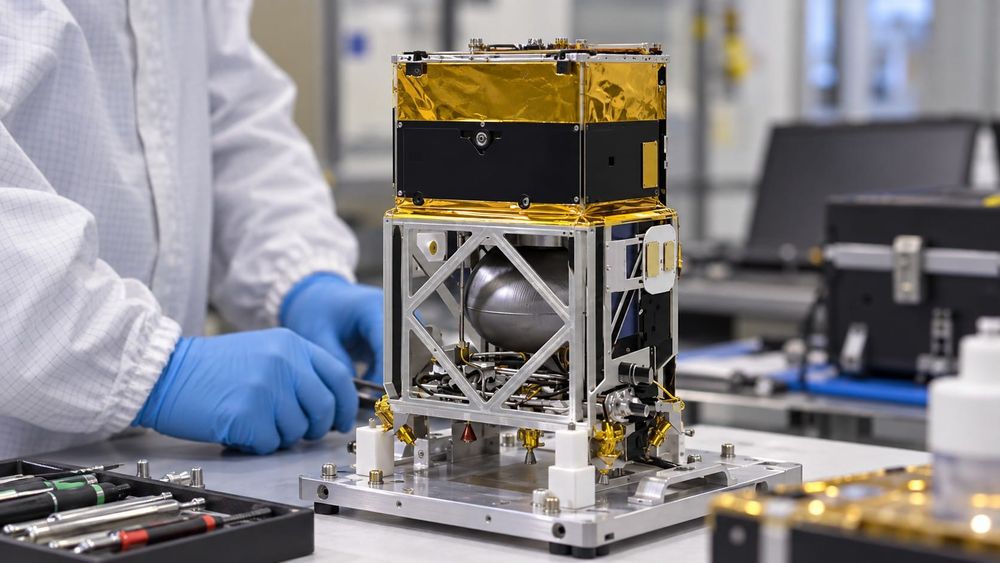
NASA’s ASCENT Propulsion Dual Mode mission has completed environmental and physical testing of its flight hardware, the agency disclosed on September 25. The spacecraft is a 6U CubeSat—a small satellite built around six standardized units—with an unusually ambitious propulsion arrangement: chemical and electrospray systems share the same ASCENT propellant. That shared supply reduces duplicated tanks and plumbing. The milestone is completed ground testing, with the central question still ahead: can the integrated spacecraft alternate between both propulsion modes successfully in orbit?
The completed work addressed several different ways a compact spacecraft can run into trouble. Helium leak testing verified seals; thermal-vacuum testing subjected the hardware to temperature and vacuum conditions; spin measurements established mass properties and balance. These are distinct checks of the physical system, rather than a published measurement of its propulsion performance. NASA’s announcement does not disclose exact completion dates for the individual tests, measured flight performance, or quantified savings from sharing the propellant supply. Final checkouts, solar-array integration and shipment remain, so the satellite has cleared a substantial preparation milestone without yet finishing its path to launch.
A 2024 architecture paper hosted by NASA explains the engineering motivation: chemical and electric propulsion offer complementary capabilities, but carrying separate systems imposes substantial size, weight and power demands on CubeSats. That earlier design described one 100-millinewton chemical thruster and four electrospray thrusters using AF-M315E, also called ASCENT. Those numbers are historical design specifications, not newly measured results or confirmation of the final flight configuration. The architectural attraction is nevertheless clear: retain access to two propulsion approaches while removing some of the duplicated equipment that would otherwise accompany them. The paper identified orbit-raising and lowering as ways to characterize the combined system.
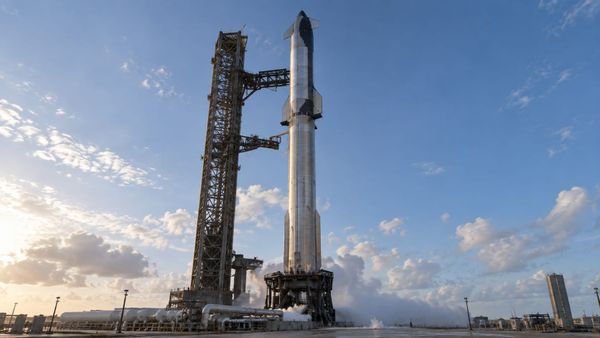
Marshall manages the mission, MIT supplies the electrospray thrusters, Plasma Processes provides the chemical module, and Georgia Tech integrates the spacecraft bus. Launch is planned no earlier than October 1 aboard Falcon 9 from Vandenberg, followed by nine months near 325 miles altitude testing alternating propulsion modes. If those operations succeed, the result would be an orbital demonstration of shared-propellant propulsion integration on a small spacecraft. The capability to watch is the combination: two propulsion modes functioning within one compact flight system, with evidence showing what that integration actually delivers.
THE DOUGH
If orbital testing validates the architecture, small-spacecraft propulsion suppliers could compete on how effectively they integrate complementary systems into limited spacecraft volume. Potential beneficiaries include thruster manufacturers, fluid-system suppliers and spacecraft integrators able to deliver the combined package. The supplied evidence establishes neither commercial pricing nor quantified savings, so any economic advantage remains conditional on flight results and production requirements.
We are not financial analysts or investment advisors. Nothing in this newsletter constitutes investment advice. All economic analysis is speculative and for informational purposes only. Do your own research.
THE POSSIBILITIES
A successful demonstration could make propulsion selection less of an either-or decision for some small-spacecraft designers. The less obvious implication is that integration expertise could become as consequential as an individual thruster’s performance: the useful product would be the coordinated system.
THE HURDLES
Ground testing has not established orbital performance, and the remaining integration and checkout work still precedes launch. Without measured performance and quantified resource savings, it is too early to say which missions would gain enough from the shared architecture to adopt it.
WHAT TO WATCH
- Completion of final checkouts, solar-array integration and shipment.
- Confirmation of launch timing and the final flight configuration.
- Successful alternation between propulsion modes during the nine-month mission.
- Published maneuver results and quantified comparisons with separate propulsion systems.
Void Economy is researched, written, and illustrated with AI, reviewed and edited by a real, live, flesh-n-blood human.