

THE STORY
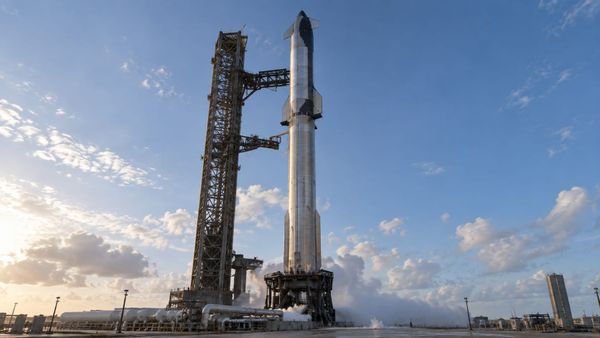
Exolaunch has signed a SpaceX contract for a Starfall mission targeting a Starship launch in 2029, opening a planned route for customers to send experiments into space and bring them back. The September 21 announcement expands Exolaunch’s offering beyond satellite deployment into payload integration for launch, operation aboard Starfall and return to Earth. Exolaunch says it will manage the technical, contractual, logistical and operational requirements. The development is a signed mission contract and an invitation to customers and partners; the announcement does not establish a completed commercial research flight. Exolaunch’s release sets out the scope.
The vehicle distinction is essential. Starship is the planned launcher; Starfall is a separate return spacecraft. The supplied evidence does not support depicting Starship itself as a flying laboratory that carries these experiments home through a propulsive landing. Nor does the announcement establish that Exolaunch has purchased an entire Starship payload bay. What customers are being offered is an integrated path through several mission stages, with Exolaunch coordinating their participation. That makes the interface between the experiment, its orbital operation and its return central to the proposition. The release leaves flight duration and the return method unspecified.
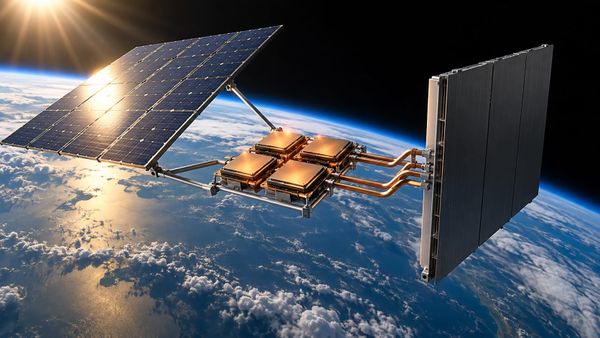
There is earlier hardware context, but it belongs to an earlier configuration. A June 23 Space.com report described Starfall’s debut test launch aboard Falcon 9. Citing an FAA assessment, it described a disk-shaped capsule approximately 3.1 meters across and 0.75 meters tall, with an approximately 1,000-kilogram payload capacity. Those dimensions make the concept tangible: a broad, shallow return vehicle with room allocated to payloads. They are not confirmed specifications for the 2029 mission, and the reported test launch does not establish successful recovery. The earlier Starfall reporting provides context without settling the future architecture.
Exolaunch identifies pharmaceutical and biotechnology companies, materials developers, governments and research institutions as prospective users. Proposed applications include crystal growth, semiconductor research and optical-fiber manufacturing; none is presented here as a demonstrated commercial result. The company reports experience launching 844 satellites across 49 missions, but returning experiments adds a different outcome to its service promise. If delivered, the capability would let customers obtain physical material back from an orbital experiment through a coordinated service. The strategically interesting step is the attempt to package that complete research journey into something customers can buy.
THE DOUGH
Potential spending could flow into payload integration, experiment hardware, mission operations and return logistics. Exolaunch’s opportunity is to earn a role across the research cycle, extending its relationship with customers beyond deployment. Whether that becomes a repeat business depends on experiment value and service economics; the announcement supplies neither named customers nor pricing.
We are not financial analysts or investment advisors. Nothing in this newsletter constitutes investment advice. All economic analysis is speculative and for informational purposes only. Do your own research.
THE POSSIBILITIES
A plausible competitive advantage could emerge in how well a service translates a laboratory’s requirements into a flight-ready experiment and a useful returned sample. If customers can repeat that process reliably, integration expertise could become as important to their purchasing decision as available payload capacity.
THE HURDLES
The 2029 mission remains planned, with its detailed configuration, flight duration and return method unestablished in the supplied announcement. Customers would also need evidence that the complete mission can return experiments in a condition that supports their research or manufacturing objectives.
WHAT TO WATCH
- Named customers and clearly defined experiment objectives.
- Confirmed 2029 Starfall configuration and payload accommodations.
- Published flight duration, operating conditions and return arrangements.
- Demonstrated recovery and results from returned payloads.
- Changes to the targeted 2029 Starship launch.
Void Economy is researched, written, and illustrated with AI, reviewed and edited by a real, live, flesh-n-blood human.