
THE STORY
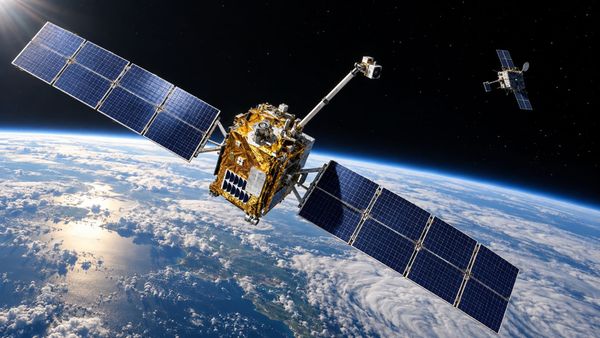
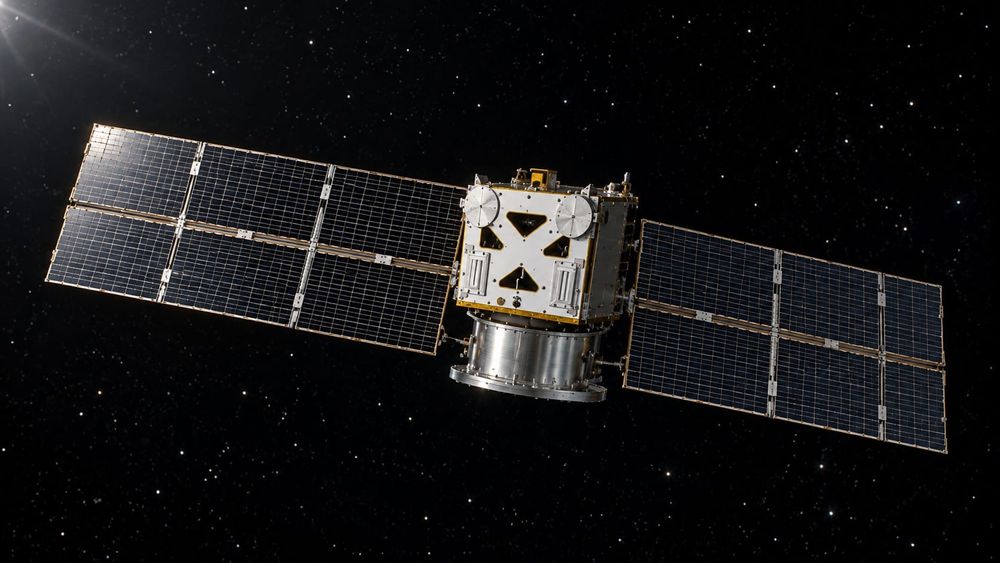
AstroForge introduced Solo and its dedicated Autonomy-1 demonstration on September 21, outlining a spacecraft intended to operate without receiving ground commands after separation. In the company announcement, Autonomy-1 is booked for Stoke’s first Nova Pathfinder flight and is intended to transmit telemetry and science data while directing its own operations. TechCrunch identifies Solo as an internally developed transformer model and reports a planned 2027 flight. The planned scientific payload is NASA Goddard’s COMPASS heliophysics instrument, giving the system science operations to coordinate alongside spacecraft functions.
Solo’s place in the control architecture is the crucial detail. It is designed to assess spacecraft state and anomalies above existing deterministic, physics-based flight software, rather than replace that software. Deterministic software follows defined rules; Solo is being positioned as an additional decision-making layer. The proposed demonstration therefore concerns how that layer interprets conditions and coordinates operations while established flight software remains underneath it. The announcement establishes this intended division of responsibilities, but supplies no flight results or reliability benchmarks that would show how well it works.
Before Autonomy-1, AstroForge plans to run Solo aboard DeepSpace-2 in shadow mode. In that arrangement, the model processes flight data but its decisions do not control the spacecraft. This sequencing matters: Autonomy-1 is not the immediate next flight, and observing real flight conditions is a different milestone from exercising control. As an inference, shadow-mode results could help expose where Solo’s assessments diverge from operational needs before the company gives it authority. They would not, by themselves, establish that a spacecraft can complete a mission without subsequent commands. That remains the purpose of the dedicated demonstration.
AstroForge cites limited communications as a motivation and attributes nearly one-third of its mission costs to its existing Earth-dependent operations model. That is the company’s cost assessment, not a measured saving from Solo. The mission’s proposed communications arrangement is especially revealing: autonomy here does not mean silence. Autonomy-1 would still send telemetry and scientific results to Earth; the intended change is removing subsequent ground commands from its operating cycle. If demonstrated, that would establish a spacecraft’s ability to coordinate its functions and scientific work without waiting for new instructions. Whether it can do so reliably through anomalies, and what recovery provisions would remain, are still unresolved.
THE DOUGH
If Solo reduces recurring ground intervention, spending could shift toward onboard autonomy software, validation and mission integration. AstroForge’s estimate that Earth-dependent operations account for nearly one-third of mission costs explains the incentive, but does not establish an equivalent saving. Autonomous operations could potentially let an organization support more missions without proportionally expanding its ground workload. The economic test would need to include the cost of developing, testing and maintaining the autonomy system.
We are not financial analysts or investment advisors. Nothing in this newsletter constitutes investment advice. All economic analysis is speculative and for informational purposes only. Do your own research.
THE POSSIBILITIES
Because Autonomy-1 would keep transmitting data, the demonstration could let operators study independent decisions without issuing the next instruction themselves. If the resulting record is sufficiently detailed, it could help distinguish successful autonomy from a mission that merely encountered few difficult situations.
THE HURDLES
No published reliability benchmarks or flight results yet establish Solo’s ability to manage the intended mission. The transition from shadow mode to control, unresolved recovery provisions and dependence on the first Nova Pathfinder flight all remain material uncertainties.
WHAT TO WATCH
- DeepSpace-2 shadow-mode results, including anomaly assessments and decision errors.
- Published boundaries between Solo’s authority and deterministic flight software.
- Final launch timing, COMPASS integration and mission success criteria.
- Recovery provisions and a flight record showing whether subsequent ground commands were needed.
- Measured operating costs that include autonomy development and validation.
Void Economy is researched, written, and illustrated with AI, reviewed and edited by a real, live, flesh-n-blood human.