
THE STORY
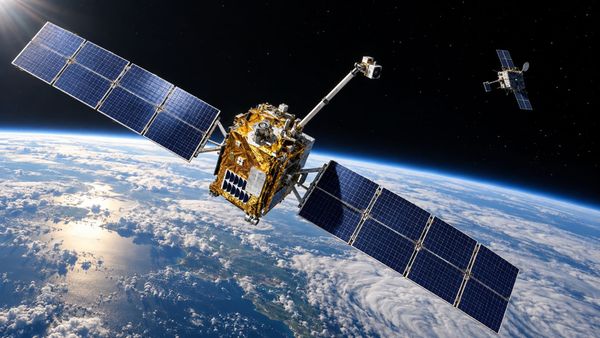
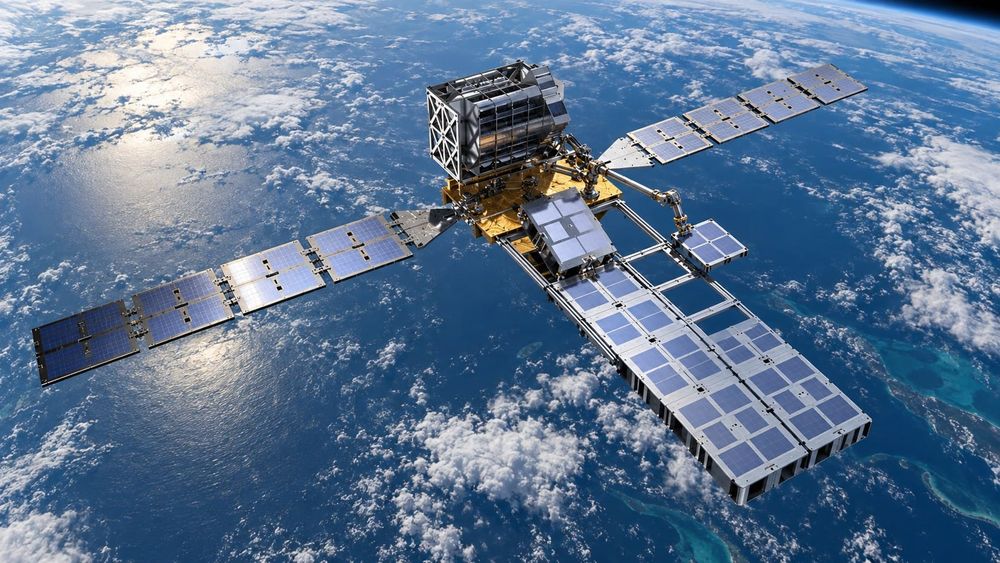
Katalyst Space Technologies has announced selection by OECIF for ASGARD, a planned spacecraft that would robotically assemble a power-beaming structure in low Earth orbit and transmit energy to Earth. The company disclosed the program in its September 21 announcement; a caption in that release documents a September 2 kickoff, so the announcement date is not the award or work-start date. The proposed mission combines Katalyst’s NEXUS robotic spacecraft platform with modular power-transmission tiles developed by the Naval Research Laboratory. Its central engineering proposition: launch the pieces, then build the working structure in space.
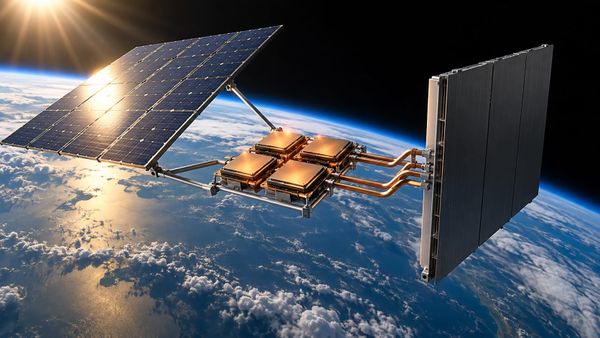
NEXUS is intended to provide mobility, manipulation and autonomous operations. Robotic arms would assemble the tiles after launch, creating a structure whose deployed size need not be limited to what fits inside a rocket as one assembled object. The tiles are designed to collect sunlight, convert that energy into microwaves and transmit power to Earth. That makes assembly and energy delivery separate but connected tests. Building the structure would establish one capability; successfully delivering useful power would establish another. Neither has been demonstrated by ASGARD in the supplied announcement. The interesting hardware story is the integration: a robotic platform building the very structure that performs the mission.
Katalyst identifies remote operations, disrupted electrical grids and disaster areas as possible applications. Those are proposed destinations for the capability, not announced customers or receiver sites. The company also envisions resupplying and expanding the system, eventually moving from kilowatt-scale toward megawatt-scale power. That is a development objective, not a measured output or a committed mission specification. The architectural implication is intriguing: if orbital assembly and subsequent expansion work, a power installation could grow through additional deliveries instead of requiring every increment of capacity to arrive as a separate, complete spacecraft.
The announcement does not specify a launch date, ground-receiver location, delivered-power target or conversion efficiency. Without those numbers, it cannot establish how much useful electricity would reach a customer, much less whether that electricity would be economical. What ASGARD introduces is a concrete development program linking robotic construction to microwave power transmission. A successful demonstration could show that orbital infrastructure can be assembled around the dimensions its job requires, then expanded after deployment. That would matter beyond the appeal of electricity from space: the construction method could become as consequential as the energy beam.
THE DOUGH
If ASGARD demonstrates useful delivery, potential spending could reach robotic assembly systems, modular power hardware, ground receivers and mission operations. Katalyst’s proposed remote and disrupted-grid applications suggest an initial market hypothesis centered on access and resilience. Expansion and resupply could create repeat business, but only if adding orbital capacity produces a service customers will buy. No contract value, service price or evidence of commercial viability is supplied.
We are not financial analysts or investment advisors. Nothing in this newsletter constitutes investment advice. All economic analysis is speculative and for informational purposes only. Do your own research.
THE POSSIBILITIES
A less obvious possibility is that ASGARD’s assembly results could prove useful even before its power economics do. If the robotic platform can reliably construct and enlarge a functional structure, that would offer evidence for other modular orbital infrastructure concepts.
THE HURDLES
The mission must connect autonomous manipulation, a functioning tile assembly and transmission to a ground receiver into one successful operation. The missing delivered-power and efficiency figures leave the most consequential performance question unanswered: how much usable energy reaches Earth?
WHAT TO WATCH
- A launch schedule and a specified ground-receiver site.
- Separate targets for generated, transmitted and delivered electrical power.
- Robotic assembly tests using representative power-transmission tiles.
- Measured transfer efficiency and evidence supporting expansion beyond the initial structure.
Void Economy is researched, written, and illustrated with AI, reviewed and edited by a real, live, flesh-n-blood human.